Showing posts with label Online publication Deep Blue Group Group Planning Guide. Show all posts

Online publication Deep Blue Group Planning Guide: Govt to compile energy safeguard steps

Posted by Unknown
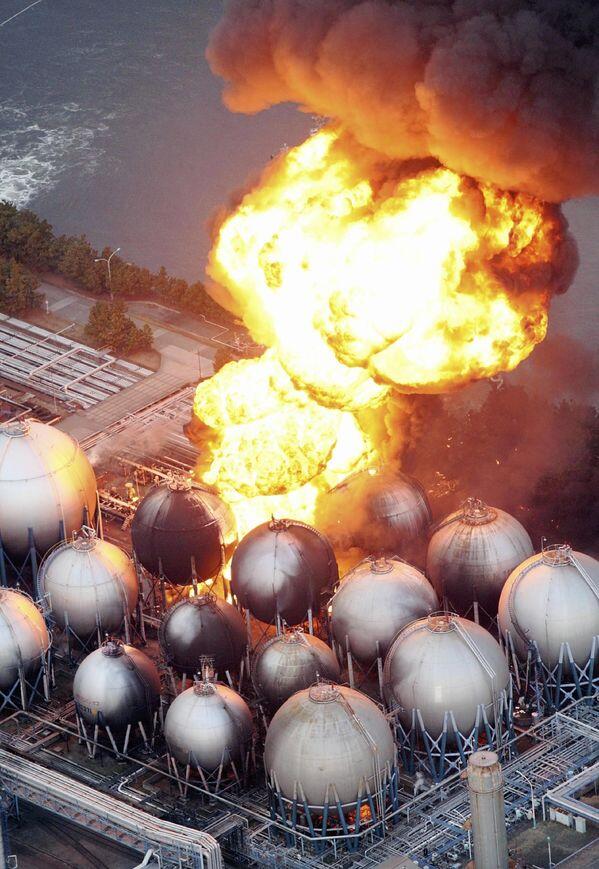
The government will begin full-fledged work to compile measures to safeguard energy supply bases, aimed at minimizing the impact of large-scale disasters on economic activities.

The measures will be designed to cope with possible damage in the event of such predicted disasters as a massive Nankai Trough earthquake and a quake directly hitting the Tokyo metropolitan area.

In the three years since the Great East Japan Earthquake in March 2011, it has become an urgent task to strengthen energy supply bases, especially electric power plants and oil refineries, which are concentrated along the Pacific coast.

On Friday, Hisayoshi Ando, director general of the Kanto Bureau of Economy, Trade and Industry, said, “If an earthquake occurs in the Nankai Trough or directly hits the Tokyo metropolitan area, the impact around the nation will be immense.”

Ando made the remark at a discussion forum held in Tokyo on strengthening energy supply bases in the Kanto region, sponsored by The Yomiuri Shimbun.

Seismological experts have estimated about a 70 percent chance of a quake of magnitude 8 to 9 with an epicenter along the Nankai Trough occurring within 30 years.

Experts have also predicted a 70 percent likelihood of a huge quake directly hitting the Tokyo metropolitan area.

In addition to the human cost, up to about ¥220 trillion in economic damage is predicted to occur in the Nankai Trough quake, as well as up to about ¥95 trillion in a quake directly hitting the Tokyo metropolitan area.

The predicted earthquakes will also inflict direct damage on facilities linked to the energy supply. In industrial zones located along the Pacific coast, including the Pacific Belt stretching from the southern Kanto region down to the Kyushu region, 79 percent of the nation’s oil refineries producing gasoline and other petroleum products are concentrated.

In addition, the zone covers 86 percent of the terminals for liquefied natural gas, a substance used to produce city gas, 84 percent of thermal power plants using LNG as fuel and 60 percent of thermal power plants using petroleum as fuel.

If the supply of electricity, natural gas, gasoline and other energy resources is disrupted, telecommunication channels such as telephones and the Internet, will be affected. Railways and other transportation systems will be paralyzed.

Medical services for those who are injured will also be crippled. The negative impact of suspended operations of manufacturing plants and others on the Japanese economy will be immeasurable.

Therefore, the government is considering such measures as moving inland those thermal power plants and other energy supply bases concentrated along the Pacific coast or increasing the number of such facilities in the Sea of Japan coastal areas.

Kobe Steel Ltd. is implementing a plan to build a thermal power plant at an inland site. Executive Vice President Hiroaki Fujiwara said, “If the government shortens the period needed for environmental assessments, it will be easier for our corporation to make decisions.”

In the wake of the Great East Japan Earthquake, Tokyo Electric Power Co. and Tohoku Electric Power Co. had to conduct rotating blackouts in their respective service areas. Because eastern and western Japan use different power frequencies, the electrical power that could be supplied from power companies in western Japan was limited.

Another task is building systems in which energy is supplied from areas not at risk of being damaged in a disaster.

The government is implementing a plan to increase facilities for converting power frequencies so that the maximum electric power volume that can be shared between eastern and western Japan will be raised from the current 900,000 kilowatts to 2.1 million kilowatts.

Reactivation of reactors at nuclear power plants located along the Sea of Japan will also contribute to securing electric power.

As there are no pipelines allowing major cities to share city gas, it is essential to create such a system.

However, fortifying energy supply bases and diversifying their locations will be extremely expensive. As early as May, the government will compile a national resilience basic plan.

It is an urgent task to compile and implement practical plans and measures on how to secure energy supply in the event of a disaster.


“To prepare for a huge disaster that could occur at any time, we must urgently strengthen our energy supply bases,” said Prof. Akira Morita of Gakushuin University’s Faculty of Law, a crisis management expert. “But preparing for disasters creates a heavy burden for private companies. The government should present a broad vision of the national resilience plan and consider financial assistance depending on the situation. Amid tight fiscal conditions, obtaining the public’s understanding is essential. The public and private sectors need to join forces in advancing such efforts.”
more »

Deep Blue Group LLC: U.S. Stocks Retreat with Emerging Equities on China Data

Posted by Unknown

U.S. stocks declined with emerging-market equities while base metals drove commodities lower as an unexpected drop in Chinese exports fueled concern that growth in the world’s second-largest economy is moderating.

The Standard & Poor’s 500 Index (SPX) fell less than 0.1 percent from a record close, while the Dow Jones Industrial Average lost 0.2 percent. The MSCI Emerging Markets Index was down 1.2 percent by 4:52 p.m. in New York, the steepest drop in a week. China’s CSI 300 Index fell to a five-year low. Copper posted its biggest two-day drop in 28 months, while lead and zinc also retreated. Corn prices sank the most in three months while 10-year U.S. Treasuries rose for the first time in five days.

China’s exports dropped the most since 2009 in February, underlining the challenge faced by the government in achieving the 2014 growth target of 7.5 percent with lawmakers meeting in Beijing on economic policy. Japan’s economy grew less than estimated in the fourth quarter and the current-account deficit widened to a record in January. In Crimea, Ukraine began army drills as Russia’s Foreign Ministry warned of “lawlessness” in the former Soviet republic’s eastern provinces.

“We’re just waiting to see what goes on overseas with geopolitical situations and developments,” Stephen Carl, principal and head equity trader at New York-based Williams Capital Group LP, said by phone. “We need to keep an eye on overseas because we’re still waiting on a concise agreement in the Ukraine, but markets, as we saw last week, continue to grind higher despite that.”

Market Anniversary

The S&P 500 has surged more than 177 percent since falling to a bear-market low, reached five years ago as of yesterday. The measure rose 1 percent last week, buoyed by improving U.S. hiring and manufacturing data. The S&P 500’s valuation rose to almost 16 times member companies’ projected earnings, the most expensive level of the year.

Industrial stocks paced declines today among U.S. equities. Boeing Co. dropped 1.3 percent after a 777-200 plane disappeared with 239 passengers and crew during a Malaysia Airline System Bhd flight to Beijing March 8. Cliffs Natural Resources Inc. slid 3.8 percent and Freeport-McMoRan Copper & Gold Inc. lost 2.5 percent, among the biggest declines in the S&P 500.

Chiquita Brands International Inc. soared 11 percent after the owner of the namesake banana label agreed to buy Dublin-based Fyffes Plc in an all-stock transaction that values Fyffes at about $526 million.

China Trade

China’s overseas shipments plunged 18.1 percent in February, customs data showed March 8. Economists surveyed by Bloomberg predicted exports would rise by 7.5 percent. Premier Li Keqiang announced this year’s economic-growth goal at the opening of the annual meeting of the National People’s Congress in the capital last week, a target unchanged from last year.

“China is moderating but only very modestly,” Donna Kwok, a Hong Kong-based senior China economist at UBS AG, said in a Bloomberg TV interview. “Ultimately you need to wait for March data to really get a true sense of the underlying outlook. The PBOC is very consciously guiding the recent volatility. We see the default as a risk, as a shift in investors’ mindset.”

The Shanghai Composite Index (SHCOMP) fell 2.9 percent, the most since June and the lowest close since Jan. 20, to pace losses in emerging-market indexes. The Hang Seng China Enterprises Index of mainland companies listed in Hong Kong slid 1.8 percent to a one-month low.

Commodities Slump

Malaysian Airline System fell 4 percent in Kuala Lumpur after the disappearance of its jet.

Brazil’s Ibovespa fell 1.5 percent to the lowest level since July as commodity exporters including iron-ore producer Vale SA tumbled. China is Brazil’s largest trading partner.

The S&P GSCI Index of commodities slid 1 percent. Copper futures dropped 1.7 percent in New York after touched the lowest level since June. The metal has fallen 5.8 percent in the past two sessions, the biggest two-day slump since October 2011. Lead retreated 0.6 percent and zinc fell 0.8 percent. China is the world’s largest consumer of industrial metals.

Gold for April delivery rose 0.2 percent to settle at $1,341.50 an ounce in New York, trading near a four-month high. West Texas Intermediate crude oil fell 1.4 percent to settle at $101.12 a barrel.

Corn futures for May delivery fell 2.2 percent to close at $4.7825 a bushel on the Chicago Board of Trade, the biggest drop for a most-active contract since Nov. 18.

Soybean Futures

The U.S. Department of Agriculture raised its outlook for world corn inventories before the 2014 Northern Hemisphere harvests by 0.7 percent to 158.47 million metric tons, topping analyst estimates.

Soybean futures for May delivery fell 2.7 percent to $14.1875 a bushel, the biggest decline since Jan. 21. Futures have climbed 9.8 percent this year.

The MSCI All-Country World Index dropped 0.4 percent today after completing a fifth weekly gain, the longest run of weekly advances since August.

Investors are also watching developments in Ukraine. The country’s armed forces are testing the combat-readiness of troops, the Defense Ministry said today on its website, reiterating the government’s desire for a peaceful end to the standoff in Crimea.

Russia has vowed to defend the ethnic Russians that dominate the Black Sea region. Crimea’s local government may use a March 16 referendum to leave Ukraine and join Russia.

European Stocks

The Stoxx Europe 600 Index fell 0.5 percent after posting its first weekly decline since January. Rio Tinto Group, the world’s second-largest mining company, fell 1.9 percent in London and BHP Billiton Plc lost 1.4 percent. A gauge of mining stocks in the Stoxx 600 decreased 2.2 percent for the biggest decline among 19 industry groups.

Iliad SA (ILD) surged 11 percent after Bouygues SA (EN) said it is in talks to sell some of its mobile-phone assets to the operator of the Free brand. Bouygues jumped 8.7 percent.

The Australian dollar depreciated 0.5 percent to 90.19 U.S. cents after advancing to 91.33 cents March 7, the strongest level since Dec. 11.

The People’s Bank of China weakened the yuan’s reference rate by 0.18 percent. The currency declined 0.2 percent to 6.1385 per dollar, according to China Foreign Exchange Trade System prices.

Spanish 10-year bonds advanced, pushing the yield six basis points lower to 3.30 percent, the least since January 2006. The yield on similar-maturity Portuguese securities tumbled for a fifth day to 4.45 percent.

Taper Pace

Yields on U.S. 10-year Treasuries fell one basis point to 2.78 percent, the first decline in five days. Economists projected U.S. payrolls would rise by 149,000 last month, with the bigger-than-expected 175,000-worker increase in data March 7 indicating the economy is starting to bounce back from frigid winter weather.

Federal Reserve Bank of Philadelphia President Charles Plosser, who votes on policy this year, said recent encouraging economic reports aren’t enough to change the pace of reductions in the central bank’s monthly bond purchases.

“The hurdle rate for change is pretty high in either direction,” Plosser said in a Bloomberg TV interview with Manus Cranny in Paris, referring to the Fed’s tapering of its stimulus program.


Fed Bank of Chicago President Charles Evans said in a speech today that he expects the U.S. economy to expand at a rate of 2.5 percent to 3 percent in 2014. Fed Chair Janet Yellen said last month the economy is robust enough to withstand measured cuts to monetary stimulus.
more »

Investing Guide at Deep Blue Group Publications: Equities sag on disappointing China trade data, Ukraine crisis

Posted by Unknown

Asian stocks slipped in early trade on Monday and the dollar stepped back from its recent highs as disappointing Chinese trade data and uncertainty over the crisis in Ukraine kept risk appetite in check.

MSCI's broadest index of Asia-Pacific shares outside Japan .MIAPJ0000PUS lost 0.2 percent, and Australian shares .AXJO shed 0.5 percent.

U.S. stock futures fell 0.2 percent from their record closing high on Friday.

The euro remained near recent highs, with bulls still heartened by the European Central Bank's reluctance last week to take further policy action.

Investors greeted the new week in Asia on a cautious note after data released on Saturday showed China's exports unexpectedly tumbled in February, swinging the trade balance into deficit and adding to fears of a slowdown in the world's second-largest economy.

The soft Chinese data put a damper on risk sentiment, which had been temporarily boosted by stronger than expected U.S. nonfarm payrolls released on Friday showing employers had added 175,000 jobs to their payrolls last month, up from 129,000 new positions in January.

"While non-farm payrolls surprised significantly to the upside on Friday, disappointing China data, escalating Russia/Ukraine concerns and the missing Malaysian aircraft have all contributed to a somber mood," IG market strategist Stan Shamu wrote in a note to clients.

Russian forces tightened their grip on Crimea by seizing another border post and a military airfield, fanning tensions ahead of a planned Moscow-backed referendum on Sunday on whether the Black Sea peninsula should join Russia.

Diplomatic efforts to cool the crisis in Ukraine calmed markets toward the end of last week, but rising tensions over Russia's intervention in Crimea have kept investors on edge.

Meanwhile, a Malaysia Airlines flight with 239 people on board vanished enroute to Beijing from Kuala Lumpur in the early hours of Saturday.

The U.S. dollar index .DXY, a composite of six currency pairs dipped 0.1 percent to 79.682 after touching a high of 79.847 on Friday after the U.S. jobs data.

Against the safe haven yen the dollar stood at 103.235, pulling away from a six-week high of 103.77 hit on Friday.

The euro traded at $1.3880, within striking distance of a 2-1/2 year peak of $1.3915 reached on Friday.

The Australian dollar, usually used as a liquid proxy for China plays, fell in the wake of the soft Chinese data. It dropped to $0.9060 from $0.9065 late on Friday.

For more online publication of latest news, visit the following:

more »

Deep Blue Group LLC: Thousands hit Tokyo streets in anti-nuke protest

Posted by Unknown


As the third anniversary of the Fukushima disaster nears, tens of thousands rallied in the country’s capital Sunday to protest against the nuclear industry and speak out against the government’s plans to resume nuke energy production to power the economy.

"I felt it's important that we continue to raise our voice whenever possible," Yasuro Kawai, a 66-year-old businessman from Chiba prefecture, east of Tokyo, told AFP.


"Today, there is no electricity flowing in Japan that is made at nuclear plants. If we continue this zero nuclear status and if we make efforts to promote renewable energy and invest in energy saving technology, I think it's possible to live without nuclear," Kawai added.


Protesters gathered in Hibiya Park, located close to government buildings, and marched around the national parliament.

Musicians performed using electricity generated by solar panels to help get the demonstrators’ message be heard.

Composer Ryuichi Sakamoto, who played music he wrote in 2011 to mourn the victims, said “the Fukushima incident continues today.” Over 1,600 residents of the stricken area died due to complications related to stress and other disaster-related illnesses, AFP reported.


On March 11, Japan will mark the grim anniversary of the deadly 9.0-magnitude earthquake that hit the country’s north, causing a huge tsunami that swept the northern Pacific coastline in 2011. Over 15,800 people were killed in the disaster and 2,636 remain missing.

The tsunami also triggered the failure of Fukushima nuclear plant’s cooling systems, which in turn led to meltdowns and leaks of radioactive material in the region. Engineers say it will take about 40 years to dismantle the crippled reactors.

Fukushima’s clean-up has been going through hard times throughout the past three years. In the latest incident, just over a week ago, the clean-up system’s alarm went off to alert that one of the cleaning pumps had stopped working.


For more topics, visit the following:

more »

Investing Guide at Deep Blue Group Publications: Asian and European industrial health under scrutiny this week

Posted by Unknown
(Reuters) - Europe's and Asia's industrial health will be closely watched in the coming week for an indication of how solid - or weak - a footing the global economy was on at the start of the year.

With China's leaders seeking to rebalance the world's industrial powerhouse more toward consumer spending, and with bad weather distorting most United States data since the start of the year, some clarity would be helpful.

After private sector business surveys suggesting services activity around the world is on the up, investors and policymakers will shift their focus to industrial production figures for the euro zone, Britain, Japan and China.

Industrial output growth in China, the world's second largest economy, is likely to have slowed further in January from 9.7 percent in December, hurt by weaker local and foreign demand.

Economists in a Reuters poll forecast a decline to a 9.5 percent annual pace, which is still strong and would not yet show the kind of rebalancing policymakers are looking for. Those figures are due on Thursday.

"China's export growth is likely to have softened in February after the surge in January due to the front-loading of exports before the Lunar New Year," said David Mann at Standard Chartered.

Beijing says it is aiming for economic growth of about 7.5 percent this year, compared with last year's actual expansion of 7.7 percent, as it seeks to revamp a maturing economy and move it towards slower but better-quality growth.

Germany, whose export-driven economy has been the driving force behind the 18-member euro zone's very slow recovery from recession, will also publish trade data this week.

"Last year, the German trade engine spluttered, already suffering from weaker demand from some emerging economies," said James Knightley, senior economist at ING.

"Ongoing problems in emerging markets combined with the winter weather in the United States could make the German export soft patch last longer than expected."

Selling more goods to a swelling global consumer base in Asia and elsewhere may be just the mix required. But as long as unemployment in the bloc remains high, there is little prospect for a strong rebound in euro zone consumer spending.

Industrial production figures for the euro area are expected to show a healthy rebound in January from December's 0.7 percent decline, according to the latest Reuters poll.

The main Markit Purchasing Managers' Index rose to its highest in more than 2-1/2 years last month, which may help explain why the European Central Bank decided to leave policy unchanged at its March meeting and signal it is content to wait and see.

After the ECB appeared to rule out any middle-of-the road options, hinting the bank would either do nothing or else take bold policy action should the outlook deteriorate, there are a host of its policymakers speaking during the week, possibly offering further guidance.

In the United States, where jobs growth was better than expected in February, there is much more certainty about the trajectory of monetary policy.

For the Federal Reserve to alter the pace at which it is winding down its massive bond-buying program - 10 billion dollars per month - the U.S. economic outlook would have to change dramatically, top Fed officials said last week.

One, Atlanta Fed President Dennis Lockhart, told Reuters in an interview that even a third month of below-par U.S. jobs growth would not be enough to warrant such a move.

After employers added 175,000 jobs to their payrolls last month, having already created 129,000 new positions in December, any talk of a change will have been muted.

If anything, U.S retail sales data due on Thursday are expected to show a return to growth in February after unseasonably cold weather took its toll the month before.

That could solidify expectations that the Fed will wind down its bond purchase programme by the end of this year and consider raising interest rates some time in 2015.

Japan will announce revisions to its fourth quarter GDP data on Monday - something it is prone to do heavily. Tokyo said last month the economy expanded 0.3 percent in the fourth quarter, well below the median estimate of 0.7 percent.

The disappointing data poses a challenge to Japanese policymakers as unprecedented stimulus efforts have showed few signs of sparking momentum in consumption and exports. Inflation also remains dangerously low there.

Central banks in Korea, Indonesia and Thailand all meet this week, and are expected to leave policy unchanged.

Thai consumer confidence tumbled to a 12-year low in February, highlighting the toll that prolonged political unrest, now in its fifth month, is taking on Southeast Asia's second-biggest economy.

But the Reserve Bank of New Zealand, well ahead of most developed nations, is nearly certain to lead the way with a rate hike at its policy review to choke off growing inflation pressures in its rapidly-growing economy.


more »

Online publication Deep Blue Group Planning Guide: Osaka skyscraper tests Tokyo dominance

Posted by Unknown

Japan’s tallest building will open Friday in Osaka, as Asia’s third-biggest metropolitan economy aims to lure tourists and stem businesses from moving to Tokyo.

Kintetsu Corp., one of the main rail operators in western Japan, spent 130 billion yen ($1.3 billion) and four years constructing the 984-foot Abeno Harukas skyscraper, according to the Osaka-based company. It will surpass the 296-meter Landmark Tower in Yokohama, about 20 miles south of central Tokyo.

The new 60-floor complex, which includes a Marriott International Inc. hotel, and a separate proposal for a 500 billion-yen casino resort are the latest attempts to bolster the city’s economy. Rather than tall towers, the metro area of 11 million people may need business zones with fewer regulations, according to Rakuten Securities Economic Research Institute.

“The building will be a success, but total demand won’t improve,” said Masayuki Kubota, chief strategist at the institute. “Osaka should try special economic zones and create new businesses from those zones.”

Japan wants to spur growth by easing restrictions in test zones under economic reforms pushed by Prime Minister Shinzo Abe. The government is considering measures from cutting corporate taxes to loosening building restrictions in the zones.

Osaka, once Japan’s capital, is the birthplace of Japan’s biggest brokerage, Nomura Holdings Inc., and Nippon Life Insurance Co., the largest non-government life insurer.

The 634-meter Tokyo Skytree broadcasting tower in Japan’s capital is the world’s tallest tower, defined as a structure where less than half the total height is usable floor space, according to Guinness World Records. The world’s tallest building is the 2,716-foot Burj Khalifa in Dubai, according to the Chicago-based Council on Tall Buildings and Urban Habitat.

Population growth in the Osaka area has stalled in recent years. The Osaka-Kobe metropolitan area’s population is forecast to be 11.3 million next year, the same as in 2005, sliding four places to rank as the world’s 19th-largest megacity as it’s overtaken by Beijing, Manila, Cairo and Lagos, Nigeria, according to data compiled by the United Nations.

Tokyo’s metropolitan population is predicted to increase to 35.5 million, retaining its spot as the world’s largest megacity, according to the UN.

The Osaka-Kobe area is still Asia’s third-biggest metropolitan economy, with a gross domestic product of $655 billion, according to figures compiled by the Brookings Institution in 2012. That’s larger than the gross domestic product of Switzerland, according to World Bank statistics.

Tokyo is the biggest Asian metro economy at $1.52 trillion and Seoul-Incheon is second at $774 billion, according to Brookings.

Tokyo’s dominance has contributed to office vacancies in Osaka as companies are drawn to the capital. Mitsubishi UFJ Financial Group Inc., the nation’s largest bank, No. 2 Sumitomo Mitsui Financial Group Inc., and Resona Holdings Inc. all moved banking unit headquarters to Tokyo in the past decade after mergers and reorganizations. Nomura relocated its head office to the capital in 1946. Nippon Life is still based in Osaka, as are Panasonic Corp. and Sharp Corp.

“Tokyo is the headquarters center for an overwhelming number of companies,” said Daita Obata, an Osaka-based assistant manager at real estate brokerage Miki Shoji Corp.

Office vacancies in Osaka’s business districts were 9.45 percent in February, the third-worst of seven major Japanese cities measured by Miki Shoji. Tokyo had the lowest rate at 7.01 percent, according to the Tokyo-based company’s latest report.

“Abeno Harukas has almost completely filled its offices,” Obata said. “However, most of the occupants are coming from the areas around Osaka. It’s not having a big impact.”

Sharp will move some of its sales staff to the new building, said Miyuki Nakayama, a spokeswoman for the electronics maker.

Japan’s dependence on commuting by trains in major cities has ensured profits for rail operators, allowing them to finance large-scale infrastructure projects and enabling Kintetsu to build Abeno Harukas.

Tobu Railway Co. completed the Tokyo Skytree in 2012, financing the project itself. Last year, a new shopping and office complex opened in the north of Osaka next to West Japan Railway Co.’s main station, featuring four new towers ranging from 33 to 48 stories and 6 million square feet of space.

Osaka’s newest tower takes its name from Abeno, the area where it’s located, and Harukas, an old Japanese expression that means to brighten or clear up, according to its website. The building’s exterior design was overseen by Cesar Pelli of Pelli Clarke Pelli architects in New Haven, Conn., who also designed the Petronas Towers in Kuala Lumpur.

“It will be the first building in Osaka to be bathed each morning in the light of the rising sun,” Kintetsu says on its website. “Visitors to the top floor will be treated to spectacular views seen nowhere else.”

Osaka, which was Japan’s capital for a short time from 645, developed as a seaport and flourished as it traded with Southeast Asia, according to the local government’s website.

Local officials are in talks with Caesars Entertainment Corp., Genting Singapore Plc and MGM Resorts International to build a gambling complex on reclaimed land in the city’s bay, Osaka Prefecture Governor Ichiro Matsui said in January.

The area is also lobbying to become one of the government’s designated special economic zones, Jiji reported, citing Shosuke Mori, chairman of the Kansai Economic Federation.

There will be a maximum of five zones in Japan, said Tatsuo Hatta, a member of the government council on the zones. Japan may make a decision on the locations this month, Abe said earlier this year.

“Osaka used to be the commercial city and Tokyo used to be the government city,” said Kubota at the Rakuten Securities Economic Research Institute. “As Japan’s original commercial city, Osaka should free lots of restrictions to spur growth.”
more »